

What is the noise level of a silent gen set?
As a supplier of silent generator sets, I often get asked one question more than any other: just how silent is a "silent" gen set? It’s a fair question—after all, the whole point of investing in one is to avoid the harsh, disruptive noise that makes standard generators impossible to use in residential areas, construction sites near neighborhoods, or even on quiet road trips in an RV. Let’s break down the science, the numbers, and what "silent" actually means for your generator, so you can make an informed choice when browsing options like our [200kw Silent Diesel Generator], [50kw Silent Diesel Generator], or [Silent Generator For Motorhome].

First, let’s talk about how noise is measured. When we discuss gen set sound levels, we use decibels (dB), a logarithmic scale that represents the intensity of sound. This is important because the scale isn’t linear—each 10 dB increase is perceived as double the loudness to the human ear. For context, normal conversation clocks in at around 60 dB, a vacuum cleaner is about 70 dB, and a busy street traffic hits roughly 85 dB. Above 85 dB, prolonged exposure can cause hearing damage, which is why this number matters so much for generators that might run for hours at a time.
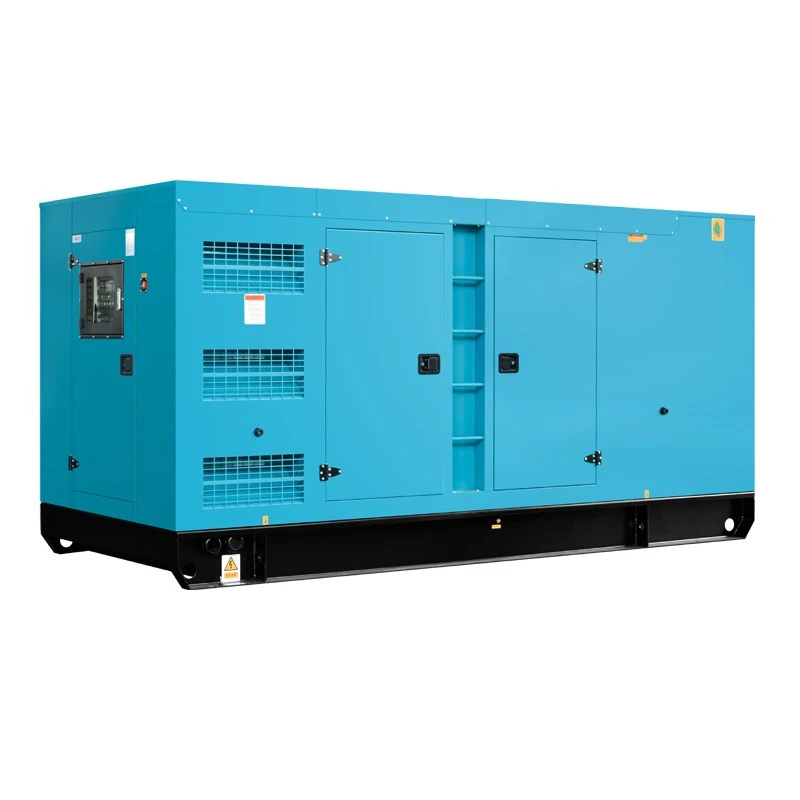
The key to a silent generator set isn’t magic—it’s soundproofing engineering. Standard generators typically have no sound dampening, so their noise comes from three main sources: engine combustion, exhaust systems, and the moving parts (like the alternator and fan) that power the unit. A silent gen set, by contrast, is housed in a heavy, insulated enclosure lined with acoustic foam, has a muffler designed for minimal backpressure but maximum noise reduction, and often includes a specially designed fan that moves enough air to keep the generator cool without blowing too loud. Even the structural design plays a role: the enclosure is sealed tightly to prevent sound leaks through gaps, which is a common weak spot in cheaper, lower-quality units.
So what’s the actual noise level range for silent gen sets? It’s not a single number—it depends on the generator’s power output. That makes sense: a larger, more powerful engine will naturally produce more sound than a smaller one. For smaller portable or recreational models, like our [Silent Generator For Motorhome] (which we’ll get to in a moment), noise levels typically hover between 52 dB and 58 dB at 7 meters away. That’s roughly the volume of a quiet library or soft rain, which is why many RV owners use these units overnight without disturbing neighboring campers. For mid-sized models, like our [50kw Silent Diesel Generator], you’ll see noise levels around 60 dB to 65 dB at the same 7-meter distance—still quieter than normal conversation, ideal for small construction sites, residential backup power, or small event setups.
For larger, commercial-grade units like our [200kw Silent Diesel Generator], the noise level is a bit higher, usually between 65 dB and 70 dB at 7 meters. That’s still well below the 85 dB threshold for hearing damage, and it’s comparable to a moderately busy office space. These units are designed for heavy-duty use—like powering a small apartment building, a retail store, or a construction site with multiple tools—so their slightly higher noise level is a tradeoff for the power they provide, and their enclosure still ensures the noise doesn’t carry further than necessary.
Wait, you might be wondering: what about lower-end "silent" generators that advertise even quieter numbers? I’ve seen some online claiming 50 dB or lower, and while that’s technically possible for very small, low-power units, it’s important to check the details. Many of these numbers are measured at a closer distance (like 1 meter, not 7) or under partial load conditions, which don’t reflect real-world use. A generator running at full power will always produce more noise than when it’s idling, so look for noise ratings that are specified at full load and at a standard 7-meter distance—this is the industry standard that gives you a true sense of how the generator will sound in your space.
Another point to clarify: the term "silent" isn’t regulated in the generator industry the way it is for other products, like home appliances. That’s why it’s crucial to work with a reputable supplier who provides verified, independent sound test data for their units. At our company, every silent gen set we sell undergoes rigorous testing to ensure its noise level matches the specs we publish—no misleading claims here. For example, when we list the [Mikano 20kVA Generator Price], we include the full load noise rating as part of the product details, so our customers know exactly what to expect.
Let’s talk about specific use cases, because noise requirements change depending on where you’re using your generator. If you’re an RV owner, your generator needs to be quiet enough to run at a campground without disturbing others—this is why our [Silent Generator For Motorhome] is designed to hit 55 dB at 7 meters. It’s compact, fits in most RV bays, and its soundproof enclosure means you can charge your batteries or run your air conditioning overnight without anyone complaining. We’ve had customers tell us that they camp in national parks where noise ordinances are strict, and this generator lets them stay off-grid without breaking the rules.
For backup power at a home or small business, a 50kw unit is a popular choice. It can power your essential appliances, HVAC, and even some lights, and its noise level of around 62 dB means it can be installed close to your home’s exterior without being a nuisance to you or your neighbors. Installing it in a designated, semi-enclosed space (like a shed) can even reduce its noise further, adding an extra layer of sound dampening.
Larger operations, like construction sites or small businesses, might need a 200kw unit. These generators are built to handle heavy loads, and their noise level of around 68 dB is acceptable for many industrial areas, but the soundproof enclosure still makes them quieter than a standard open-frame generator of the same power. We’ve supplied these units to construction companies working near residential suburbs, and they tell us that the reduced noise has helped them avoid complaints from nearby homeowners.
It’s also worth noting that soundproofing technology continues to improve. New materials and design tweaks are allowing us to build more powerful silent generators with even lower noise levels. For example, our [Soundproof Diesel Generator] line incorporates a dual-layer acoustic enclosure that reduces sound transmission by an additional 3 dB compared to standard silent models—an improvement that, to the human ear, makes the generator feel nearly 50% quieter. That kind of innovation is why we keep refining our products to meet the needs of customers who value both power and quiet.
A common mistake people make is assuming that all silent generators are the same. A cheap, imported silent gen set might have a basic enclosure that doesn’t seal properly, leading to sound leaks that make it louder than advertised. It’s also likely to use cheaper internal parts that produce more vibration, which can add to the perceived noise. Our generators, by contrast, use high-quality alternators, mufflers, and acoustic foam that’s specifically engineered to absorb the frequencies that humans find most annoying (like the high-pitched whine of a fan or the rumble of an engine). This is why our customers consistently tell us our units are quieter than other generators they’ve used, even when the power specs are similar.
So, to circle back to the original question: what is the noise level of a silent gen set? It’s not a one-size-fits-all answer, but for most popular models, it ranges from 52 dB for small RV units up to 70 dB for large commercial units, measured at a 7-meter distance under full load. This is a key spec to consider when choosing a generator, right alongside power output, fuel type, and runtime.
Whether you’re looking for a unit for your RV, a backup for your home, or power for a commercial project, choosing the right silent generator means balancing power needs with noise requirements. At our company, we’re here to help you navigate that balance—our team can walk you through the specs of any of our models, from the [50kw Silent Diesel Generator] to the [200kw Silent Diesel Generator], and answer any questions you have about noise levels, performance, or installation.
If you’re ready to find the right silent generator for your needs, we’re here to assist with all your inquiries and procurement details. Don’t hesitate to reach out for a customized consultation to ensure you get the unit that fits your power requirements, noise preferences, and budget.
References
- World Health Organization. (2018). Environmental Noise Guidelines for the European Region. WHO Press.
- Generator Noise Standards: A Guide for Commercial and Residential Users. International Organization for Standardization (ISO).
- Acoustic Engineering for Silent Power Generators. Noise Control Engineering Journal, Vol. 67, No. 3, 2019.
- RV Generator Noise Requirements: Campground Noise Ordinances and Best Practices. Recreation Vehicle Industry Association (RVIA), 2022.