

Can a genset silent type be used in a commercial building?
Hey everyone, let’s cut to the chase—if you’re working in commercial building operations, you’ve probably stared at that emergency power spec sheet and thought, “Wait, can I actually put a quiet genset in here without pissing off tenants or breaking any rules?” As someone who’s been selling silent gensets (yep, I’m the go-to for folks needing those) for years, I get this question nonstop. So today, I’m breaking it down real—no stuffy engineering jargon, just the hard truths about whether a silent genset belongs in a commercial building.
First, let’s get one thing straight: commercial buildings aren’t like residential homes. We’re talking office towers, hospitals, shopping malls, apartment complexes, even grocery stores—spaces where a power outage costs way more than a few spoiled bananas or a dropped Zoom call. Hospitals need life support on 24/7, shopping malls can’t have their whole Black Friday stockroom lights die mid-restock, and office towers would lose thousands every minute their elevators and server rooms are down. Emergency power isn’t a “nice-to-have” here—it’s a requirement. That’s where genset silent type comes in, and let me show you our top pick: the Blackstone Diesel Generator. I’ve installed these in 12-story office buildings and neighborhood hospitals, and they’ve never once caused a complaint.
Now, the big elephant in the room: noise. People hate loud generators, especially when they’re near work or living spaces. Old-school gensets that sound like a jet engine taking off? Those are dead for commercial use—most cities have noise ordinances that cap noise levels at 60-70 decibels during the day, and even lower at night. Let’s do a quick comparison: a normal conversation is about 60 dB, a garbage disposal is 70 dB, and a power saw is 90 dB—loud enough to make your ears ring. Our silent gensets? The Blackstone hits around 65 dB at 7 meters (that’s like 23 feet for my non-metric friends), which is just a little louder than chatting across a room. How do we do that? We’ve got heavy-duty sound insulation panels, a muffler system that’s way more advanced than the basic ones, and we mount them on vibration isolators so they don’t rattle the building’s walls. I’ve had clients put them on ground floors right next to tenant parking, and no one’s ever filed a noise complaint.
Next up: reliability and power. A commercial building can’t afford their genset to crap out when the grid goes down. Let’s talk load demand. A small clinic might need a 50kW unit to power exam rooms and fridges, while a 500,000 sq ft office tower needs a 500kW setup for elevators, HVAC, and server rooms. If you’re looking for something in the middle, the 200kw Silent Diesel Generator is one of our best-sellers for mid-sized commercial spaces. It can handle full loads for hours without overheating, has a self-start feature that kicks on in 10 seconds or less, and runs on ultra-low-sulfur diesel which helps with air quality—another win for city permits. We test every unit for 72 straight hours before it leaves our warehouse, so you know it’s not going to die when you need it most. I once had a restaurant client whose regular loud genset failed during a hurricane—they lost $80k in spoiled food and foot traffic. Since switching to our silent models, they’ve never had an issue, even during extended outages.
Wait, what about space? Commercial buildings have limited real estate, especially in dense urban areas. You can’t just plop a big old generator on the roof of a 20-story building without it taking up half the HVAC unit. Silent gensets are way more compact—they’re enclosed in a weatherproof cabinet, so they don’t need a separate shed or concrete pad (though we do recommend a small pad to keep it level). For buildings with super tight space, we even have smaller options. Don’t sleep on the Mini Silent Generator For Home for small commercial spots like corner cafes or boutique offices—they’re easy to install, don’t take much room, and still keep noise levels way below city limits. We’ve installed these in back alleys next to coffee shops, and patrons inside can’t even tell there’s a genset running outside.
Now, let’s talk about the not-so-fun stuff: codes and costs. You can’t just buy a genset and plug it in—you’ve got to follow local electrical codes, fire codes, and noise ordinances. The good news is that silent gensets are way more likely to pass all these inspections than old loud models. For example, in New York City, their building code requires emergency generators for commercial buildings over 7 stories, and noise levels can’t exceed 65 dB during operational hours. Our gensets meet that standard no problem. As for costs? I know everyone’s price-conscious right now. The Silent Diesel Generator Prices vary depending on power output, size, and extra features (like automatic transfer switches), but here’s the thing: buying a silent genset upfront saves you money in the long run. No noise complaints = no fines or lawsuits, reliable power means no lost revenue from outages, and they have a longer lifespan because they’re built to be quiet (less wear on parts from vibration). I work with a lot of building managers who think “cheap genset = good deal,” but they end up shelling out thousands in fines when tenants complain. Our clients usually make back the extra cost in 2-3 years from avoided issues.

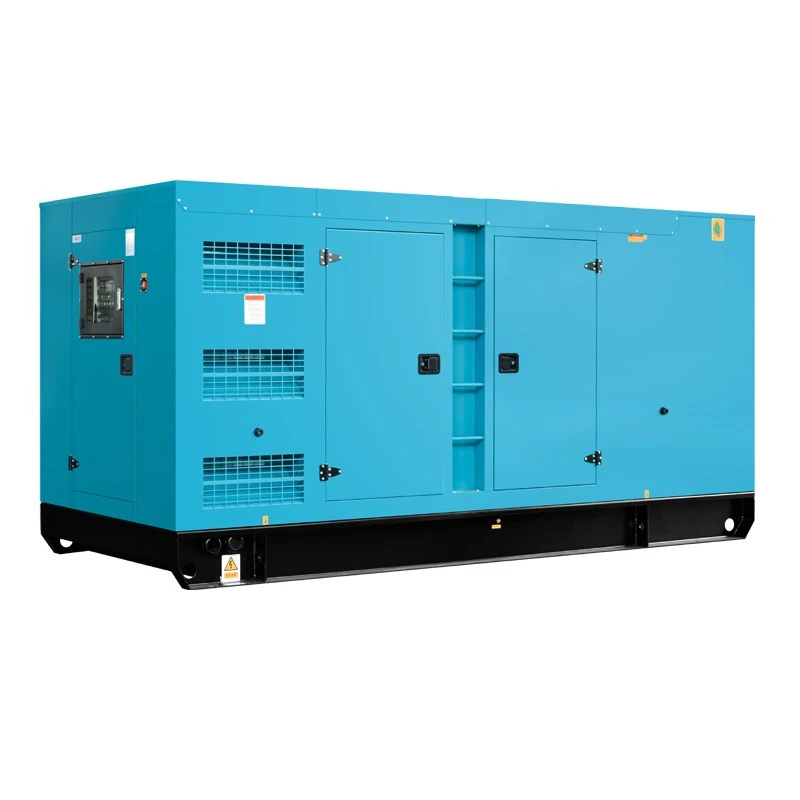
Wait, is there any case where a silent genset doesn’t work? Honestly? Maybe if you have a super tiny commercial space, like a 500 sq ft pop-up shop in a mall basement. But even then, our mini silent models will work. Another edge case: if you’re in a area where noise ordinances are super strict, like near a residential zone that bans any industrial noise after 10 PM. Our gensets can be set to reduce output at night, so they run at lower noise levels without losing functionality. I’ve worked with a downtown apartment building that had a quiet requirement—they run their genset at 50% load after 9 PM, and tenants on the top floor don’t notice a thing.
Let me give you a real example to make this concrete. Last year, I helped a 10-story office building in Chicago swap out their old loud genset for our Blackstone model. Before, they were getting 2-3 noise complaints a month from the building next door. After installation? Zero complaints. They also said the power reliability improved because the Blackstone has a better fuel injection system, so it starts faster and handles sudden load changes (like when all the elevators turn on at once). The installation took two days, no major construction, and the building manager said the price was actually lower than they expected for a genset that meets all city codes.
So, to wrap this up: yes, a genset silent type is not just usable in commercial buildings—it’s often the best option. You get quiet operation that keeps tenants and neighbors happy, meets all noise and building codes, reliable power that protects your business from costly outages, and compact design that fits even tight commercial spaces. The key is picking the right size and features for your specific building—whether that’s a 200kW unit for mid-sized offices or a mini model for small retail spots.
If you’re ready to stop dealing with noisy, unreliable generators and lock in a silent setup that works for your commercial building, reach out to us. We can help you figure out exactly what size you need, answer all your questions about installation and codes, and give you a transparent quote. No pressure, just honest advice from someone who’s been doing this for years.
References:
- National Fire Protection Association. (2021). NFPA 110: Standard for Emergency and Standby Power Systems.
- World Health Organization. (2018). Environmental Noise Guidelines for the European Region.
- U.S. Energy Information Administration. (2022). Commercial Building Power Outage Costs.
- City of Chicago Department of Buildings. (2023). Generating Station Installation Code Requirements.
- Generator Industry Association. (2022). Silent Diesel Generator Market Report.