

How does the automatic transfer switch work with a silent gen set?
If you’ve ever lost power during a storm—whether at your home, a small retail store, or a construction site—you know two things: first, the sudden silence and chaos that comes without lights, refrigeration, or critical equipment, and second, the frustration of trying to fire up a generator manually, fumbling with switches in the dark, or waiting too long for power to kick in. That’s where the automatic transfer switch (ATS) paired with a silent generator set changes everything. As a supplier specializing in silent power solutions, I get asked this question all the time: How does an ATS actually work with a silent gen set, and why does it matter more than just a portable generator and a extension cord? Let’s break this down with real-world context, technical basics, and why pairing your silent generator with the right ATS is non-negotiable for reliable, low-noise backup power.
First, let’s clear up a common misconception: a silent generator set isn’t just a loud machine with a soundproof box around it. At its core, it’s a diesel or natural gas generator encased in a noise-dampening enclosure (think thick acoustic insulation, vibration-dampening mounts, and tuned exhaust systems) that cuts decibels from 70+ dB (the level of a busy street) to 60 dB or lower—about as loud as a normal conversation. That’s why businesses, residential areas, and outdoor events choose options like the Blackstone Diesel Generator or the MQ Power 20kW Diesel Generator: they deliver consistent power without disrupting neighbors, staff, or event attendees. But a generator is useless if you have to manually connect it to your home’s circuit breaker panel the second power cuts out. That’s the ATS’s job.
Let’s start with the ATS’s basic role: it’s a critical, pre-wired device that sits between your main utility power line and your building’s electrical panel. It acts as a middleman that monitors utility power 24/7, and within seconds of detecting a outage, it signals your silent generator set to start, switches your building’s power from the grid to the generator, and then swaps back to the grid once utility power is restored. No manual steps, no fumbling in the dark, no risk of back-feeding power into the grid (a dangerous mistake that can injure line workers). But how does this sync work specifically with a silent generator? Because silent gensets are often deployed in places where noise is a concern—like residential neighborhoods or near outdoor patios—their startup sequence is calibrated to be quiet, and the ATS integrates with that sequence to avoid any unexpected disruptions.
Here’s a step-by-step breakdown of how the system works, from outage to full power:
-
Power Monitoring: The Constant Check-In
The ATS is wired to your utility’s power lines, and it uses sensors to track two key metrics: voltage and frequency. For standard 120/240V systems in North America, normal voltage hovers between 114V and 126V, and frequency stays at 60 Hz. If voltage drops below 90V or spikes above 140V, that tells the ATS there’s a problem. This monitoring happens every few seconds, 24/7—no delays, no gaps. -
ATS Triggers the Silent Gen Set to Start
Once the ATS detects a sustained outage (usually 10 seconds or more, a delay that prevents the generator from starting for minor, brief blips), it sends a low-voltage signal to your silent generator’s control panel. This isn’t a loud start command, either: the control panel is calibrated to the silent gen set’s design, so the cranking motor for the diesel engine is quieted by vibration mounts and a sound-dampened starter housing, and the fuel injectors fire slowly to avoid the loud “clatter” common in standard generators. For example, the Powertech Diesel Generator has a control panel that integrates directly with compatible ATS units, so the start sequence is fully automated and noise-optimized. -
The Generator Warms Up (Quietly, of Course)
Silent generator sets aren’t ready to deliver full power the second they start—they need 10 to 30 seconds to stabilize. The ATS waits this out, too: it doesn’t switch the load (your building’s circuits) to the generator until the gen set’s voltage and frequency match the grid’s exactly. For silent gensets, this warm-up period is designed to be low-noise; the enclosure’s insulation keeps the engine’s idling hum below 60 dB, so even if the gen set is installed near a bedroom or a patio, you won’t notice it running. This is a big difference from portable generators, which often kick on at full power immediately and can reach 80 dB or more at close range.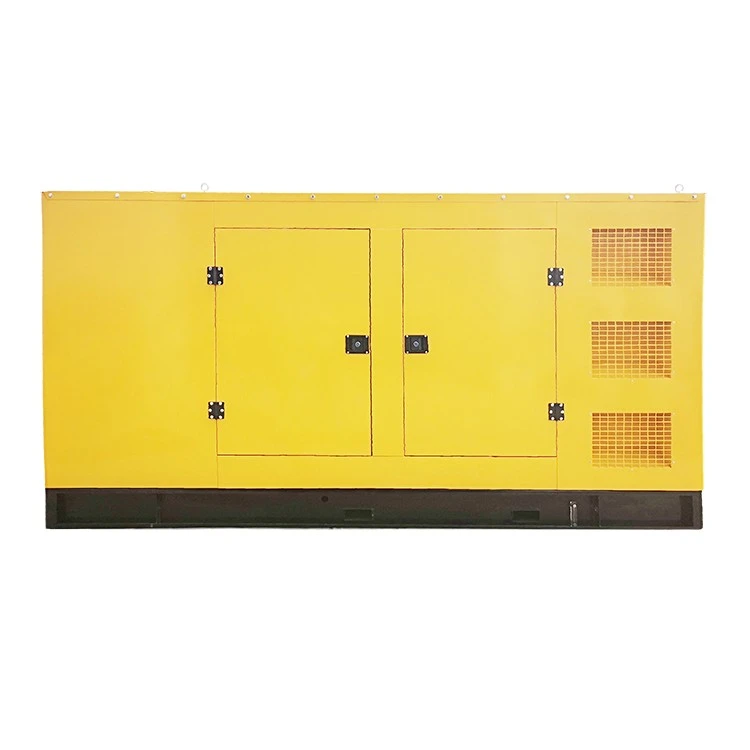

-
ATS Switches the Load From Grid to Generator
Once the generator is stable, the ATS does two things at once: it disconnects your building’s electrical panel from the grid, and connects it to the generator’s output. This is a seamless transfer—most ATS units can switch the load in less than two seconds, which is fast enough to keep critical circuits (like refrigeration for a restaurant, medical equipment at a home, or security systems) running without interruption. For silent generator users, this transfer is also quiet: there’s no loud click or spark because the ATS is a solid-state switch in many models, not a mechanical relay that creates noise. That’s a key feature for customers who use their silent gensets for residential backup or outdoor events, where noise ordinances are strict. -
Power Restoration: Swapping Back
When utility power comes back, the ATS continues monitoring until the grid is stable again (usually 2 to 5 minutes, to avoid switching back for temporary blips). Once it confirms the grid is consistent, it sends a signal to the silent generator to shut down, and switches the load back to the grid. The generator then goes through a cool-down period (2 to 5 minutes) before turning off—this prevents damage to the engine by letting it run without load for a few minutes, which is also optimized for quiet operation. The enclosure’s cooling system is tuned to be quiet during this cool-down, so even when the gen set is winding down, there’s no disruptive noise.
Now, you might be wondering: why can’t you just use a generator without an ATS? For silent gen set suppliers, this is one of the most common questions we hear from customers who are looking to cut costs. But here’s the reality: manual transfer switches (or just extension cords) come with big risks. If you plug a portable generator directly into a wall outlet and the grid comes back on, power can flow backward into the utility lines, which can kill line workers repairing the lines. Also, manual switching means you have to remember to start the generator every time power cuts out, which is impossible if you’re sleeping or away from home. For silent generator sets, the cost of an ATS is a small fraction of the total system, and it adds a layer of safety and convenience that portable setups can’t match.
Another point to consider: not all ATS units work with all silent generator sets. That’s why it’s important to pair your ATS with a gen set that’s designed for seamless integration. For example, our 200kw Silent Diesel Generator is engineered to work with standard 200A ATS units, with a control panel that communicates directly with the switch to ensure smooth startup and transfer. If you mix and match a generic ATS with a silent gen set, you might run into issues: the generator could start at the wrong time, or the transfer could be noisy, or the gen set might not reach stable power fast enough to avoid circuit interruptions.
Noise is another big factor when pairing an ATS with a silent generator. Many silent gen set owners choose their units specifically to comply with local noise ordinances—for example, a café in a residential area can’t have a generator that’s loud enough to disturb nearby apartments, so the ATS needs to avoid any extra noise that might come from switching. Solid-state ATS units are quieter than mechanical ones, and when paired with a silent gen set, the entire system (startup, runtime, transfer) stays at or below 60 dB, which is within most local noise limits for daytime and nighttime use. You can see this in action with products like the Soundless Generator Price lineup, which is designed for residential and small commercial use where noise is a top priority.
Let’s also talk about sizing, because that ties into how the ATS and silent gen set work together. The ATS has to be sized to match your generator’s output. If you have a 20kW silent generator, your ATS needs to be rated for at least 20kW (or 83.3A at 240V) to handle the load. If the ATS is too small, it can overheat or fail during a power outage. As a supplier, I always recommend that customers calculate their total load (the sum of all circuits they want to power during an outage—critical items like refrigeration, HVAC, medical equipment, and lighting, not just every device in the house) and size both the silent gen set and ATS accordingly. For example, a home with a 10kW total load would pair well with a MQ Power 20kW Diesel Generator (which has extra capacity for future needs) and a 10kW ATS.
Now, what about maintenance? A silent gen set and ATS need regular upkeep to work properly, just like any other electrical system. For the ATS, this means annual inspections to check for loose connections, test the voltage sensors, and make sure the switch transfers smoothly. For the silent generator, it means oil changes, filter replacements, and testing the startup sequence every few months. When you pair them as a system, maintenance becomes simpler—most reputable silent gen set suppliers offer packages that include ATS testing and generator servicing, so you don’t have to coordinate two separate maintenance schedules.
I’ve seen firsthand the difference a good ATS-silent gen set pairing makes. A few years ago, we installed a system for a small grocery store in a hurricane-prone area. Before, they had a portable generator that employees had to hook up manually, and during a 2022 storm, a power outage lasted 12 hours—by the time an employee got to the store, the refrigeration had already spoiled $10,000 worth of produce. After we installed a Blackstone Diesel Generator and a compatible ATS, the next time power cut out, the generator started in 10 seconds, transferred power automatically, and kept the refrigeration running the entire time. The store didn’t lose any product, and the local neighbors didn’t complain about noise from the generator—perfect, reliable, quiet backup.
If you’re in the market for a silent gen set and ATS, don’t cut corners. A system that works together seamlessly will save you money on repairs, prevent costly losses from outages, and keep noise levels low. If you’re ready to find the right setup for your home, business, or project, reach out to our team to discuss your needs, get detailed product specifications, and learn more about how our ATS-integrated silent generator sets work.
References
- Occupational Safety and Health Administration (OSHA). 2023. "Portable Generator Safety: Avoid Backfeeding and Carbon Monoxide Hazards." U.S. Department of Labor.
- International Electrical Testing Association (NETA). 2022. "Standard for Maintenance Testing of Automatic Transfer Switches." NETA Worldwide.
- Noise Control Foundation. 2021. "Noise Standards for Standby Power Generators in Residential and Commercial Areas." Noise Control Foundation.
- U.S. Department of Energy. 2020. "Standby Power Systems: Selection, Sizing, and Maintenance Guidelines." Office of Energy Efficiency and Renewable Energy.