

What is the output waveform of silent generators for sale?
If you’ve ever relied on a silent generator for sale—whether for a home backup during a storm, a construction site’s temporary power, or a remote event—you’ve probably noticed its ability to power TVs, refrigerators, or power tools without the hum and roar of a standard open-frame unit. But beyond its quiet operation, a silent generator’s output waveform is a critical, often misunderstood detail that determines whether it will protect your expensive electronics or cause costly damage. As a supplier who’s spent 12 years helping customers choose the right silent power solutions, I’ve lost count of the times clients ask, “Why does waveform matter?” or “What exactly is the output waveform of these units, anyway?” Let’s break this down in plain, practical terms—no overly technical jargon, just what you need to know to pick a generator that works for your needs.
First, let’s start with the basics: waveform is the shape of the electrical signal a generator produces, measured over one full cycle of alternating current (AC) power. Grid power—what comes out of your wall outlets—has a smooth, consistent sine wave. Think of it as a gentle, symmetrical curve that rises to a peak, falls to a trough, and repeats evenly 50 or 60 times per second, depending on your region (most of North America uses 60 Hz, while Europe, Asia, and parts of Africa use 50 Hz). This smoothness matters because most modern electronics—smartphones, laptops, refrigerators, and LED lights—are built to run on that exact grid-style waveform. If a generator’s waveform is distorted, those devices can glitch, overheat, or even fail permanently over time.
Now, for silent generators, there are two main waveform types you’ll encounter: pure sine wave and modified sine wave (sometimes called quasi-sine wave). Modified sine wave units are often cheaper, especially in smaller portable models, but they come with tradeoffs. For example, a basic Mini Silent Generator For Home might be a modified sine wave unit, designed for powering simple appliances like a space heater or a fridge—but plug in a sensitive device like a smartphone charger, and you might notice it charges slower than it should, or even causes a loud buzzing noise. Modern power tools with brushless motors, which are common on job sites, can also run hotter and wear out faster on modified sine wave, because the distorted signal disrupts the motor’s rotation.
Pure sine wave silent generators, by contrast, mirror the grid’s smooth curve. That’s why they’re the better choice for any application involving electronics, even if it means a slightly higher upfront cost. As a supplier, I’ve seen first-hand how investing in a pure sine wave unit saves customers money in the long run. For example, a customer last year bought a modified sine wave portable generator for his small construction crew, and within two weeks, two of his power drills burned out because of waveform distortion. He swapped it for a Portable Silent Diesel Generator from our line, which produces a pure sine wave, and those same drills have run flawlessly for 18 months now. That’s the kind of real-world impact waveform has—far beyond just a technical specification on a spec sheet.
Let’s talk about how silent generators achieve this waveform, since the “silent” part comes from a heavy, sound-dampening enclosure that surrounds the engine and alternator. The alternator is the component responsible for generating the electrical signal, including its waveform. In traditional open-frame generators, the alternator’s design is simpler, but the enclosure in silent models requires more precision to avoid vibration that can distort the signal. For 20kw Silent Diesel Generator, which is a common mid-sized unit for small commercial operations or large home backup, we engineer the alternator with a thicker stator winding and a balanced rotor to minimize any irregularities in the current. This ensures the output remains a steady pure sine wave, even when the generator is running at partial load (say, powering half your office equipment instead of the full rated capacity).
Wait, but what about larger units, like a 200kw Silent Diesel Generator that’s meant to power an entire office building or a remote construction camp? The waveform rule still applies here, but the scale changes. A 200kw unit has a much bigger alternator, but we still prioritize waveform quality because most modern commercial buildings rely on sensitive IT equipment, servers, and security systems. In fact, for Powertech Diesel Generator models—our premium line for heavy-duty use—we include a digital waveform stabilizer that monitors the output 120 times per second, adjusting tiny fluctuations to keep the sine wave within 1% of grid standards. That might sound obsessive, but when a server outage can cost a retail store $10,000 an hour in lost sales, that level of precision is non-negotiable.
I often get asked, “Can I test the waveform myself?” The short answer is, if you’re not an electrician, it’s easier to rely on the manufacturer’s specifications. Reputable silent generator suppliers will clearly label whether their units produce pure sine wave, and they’ll specify the total harmonic distortion (THD) rate. THD measures how much the waveform deviates from a perfect sine wave—lower is better. Grid power has a THD of less than 5%, and a good pure sine wave generator will have THD under 3%, which is safe for all electronics. Modified sine wave units often have THD of 20% or higher, which is where the problems start. I’ve seen customers try to save $200 on a modified sine wave generator, only to spend $1,500 repairing a smart fridge that burned out a month later—so that specification is worth checking twice.
Another common question: Does load affect the waveform? Yes, in some cases. A generator’s waveform can get distorted if you overload it, or if you turn on high-startup devices (like an air conditioner or a power saw) all at once. That’s why it’s important to match your generator’s capacity to your needs. For example, a 5kw mini silent generator might work for powering your home’s lights and fridge during a blackout, but if you try to run your central AC and a microwave at the same time, you’ll put too much load on it, and the waveform might dip. As your supplier, I always encourage customers to calculate their total startup power needs (most appliances have a surge power rating, which is higher than their running power) before choosing a unit. I’ve had clients who bought a 10kw generator thinking it would cover everything, only to realize they needed a 15kw to handle the AC’s startup surge—so that extra step of checking power requirements saves hassle later.
Now, let’s address a common misconception: all silent generators with “pure sine wave” labeling are created equal. That’s not true. Some budget models claim pure sine wave but don’t meet the THD standard, so they still cause issues with sensitive electronics. For that reason, I recommend looking for units that are certified by independent testing groups, like the Underwriters Laboratories (UL) in the U.S. or the European Committee for Electrotechnical Standardization (CENELEC) in Europe. Our line of silent generators, from the mini home models to the 200kw commercial units, all have UL certification for pure sine wave output, so customers don’t have to guess.
I want to share a recent example to put this in perspective. A customer in a rural area of Ohio contacted us last spring, after a winter storm knocked out power for three days. He’d bought a cheap modified sine wave portable generator for his small farm, and when he tried to use it to power his farm’s water pump and his livestock’s heating pads, the pump’s motor burned out. He called us looking for a solution, and we recommended a Mini Silent Generator For Home that produced pure sine wave. He told us a month later that it had worked perfectly during another minor power outage, and his water pump was still running without issues. That’s exactly why waveform isn’t just a technical detail—it’s what makes a generator useful, instead of a paperweight when you need it most.
As someone who’s been in the silent generator industry for years, I know that when you’re shopping for a unit, price and noise level are often the first things you compare. But waveform is a silent factor (pun intended) that can make or break your experience. If you’re not sure which silent generator for sale is right for your needs, whether it’s for home backup, a construction site, or a commercial operation, the best step is to connect with a supplier who can walk you through the details. Don’t be afraid to ask specific questions: “What’s the THD rate?” “Is this pure sine wave certified?” “Will it handle my specific devices?” A good supplier will be transparent about these specs, and will help you avoid choosing a unit that’s the wrong fit.
If you’re ready to explore options, we have a range of pure sine wave silent generators tailored to different needs, from compact home models to heavy-duty commercial units. You can browse our selection, including the 20kw Silent Diesel Generator, the Mini Silent Generator For Home, the Portable Silent Diesel Generator, the 200kw Silent Diesel Generator, and our premium Powertech Diesel Generator line. We also work with customers to match the right generator to their power needs, so you don’t have to guess about waveform, capacity, or noise level. Whether you’re preparing for storm season, powering a remote project, or upgrading your home backup system, we’re here to help you find the right silent generator with the reliable waveform you need.
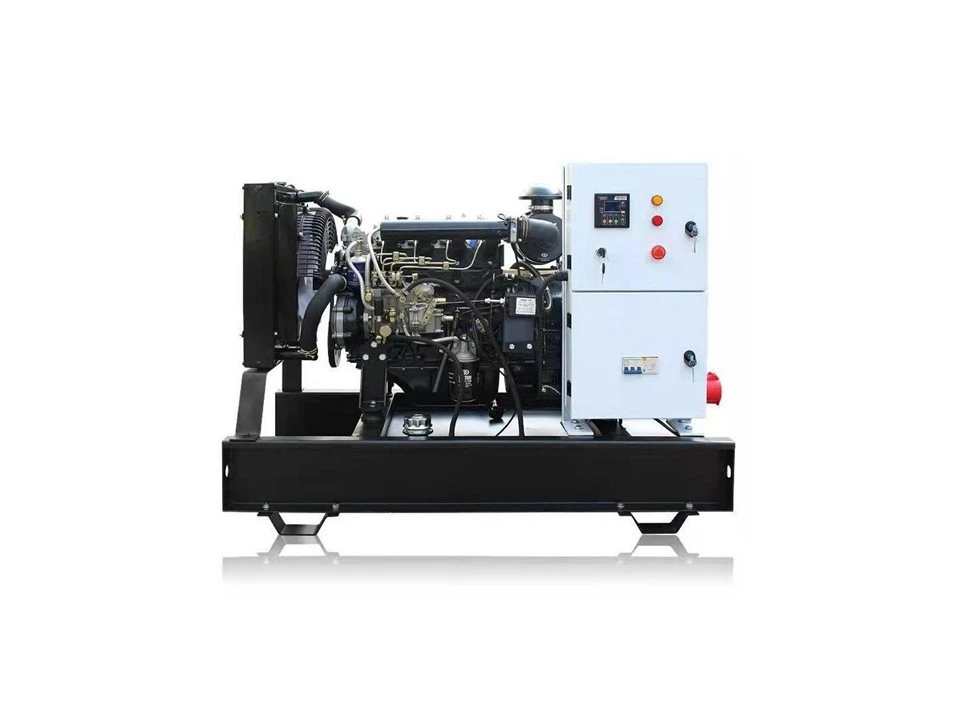

References
- Underwriters Laboratories. (2022). Standard for Safety for Engine-Driven Generators (UL 2200). Northbrook, IL: UL.
- International Electrotechnical Commission. (2021). Alternative Current Generators for Power Applications (IEC 60034-1). Geneva, Switzerland: IEC.
- U.S. Department of Energy. (2020). “Standby Generators: Selecting the Right Unit for Your Home.” Washington, DC: U.S. DOE Office of Energy Efficiency and Renewable Energy.
- European Commission. (2019). “Noise Emission Standards for Portable Generators.” Brussels, Belgium: Directorate-General for Internal Market, Industry, Entrepreneurship and SMEs.