

What is the sound level of a Super Silent Diesel Generator at different distances?
If you’ve ever stood near a traditional diesel generator, the deep, rumbling roar that rattles window panes and makes conversation feel like a chore is probably top of mind when you think about power backup. But as a supplier of Super Silent Diesel Generators, I get asked this question all the time: “How much quieter are these really? And how does the noise level change depending on how far I am from the unit?” It’s a practical question—whether you’re sizing a backup power system for a remote construction site, a residential property, or a commercial warehouse, knowing how noise dissipates helps you plan for zoning rules, neighbor relations, and even your own comfort during extended power outages.
Let’s start with a quick reminder: sound is measured in decibels (dB), a logarithmic scale that describes sound intensity. Every 10 dB increase is perceived as roughly double the loudness to the human ear. For context, a normal conversation is around 60 dB, a vacuum cleaner is about 70 dB, and a lawn mower hits roughly 90 dB. Long-term exposure to sounds above 85 dB can cause hearing damage, so for any generator used near people, keeping levels well below that threshold is non-negotiable.
Traditional open-frame diesel generators typically range from 95 to 115 dB at a distance of 7 meters (about 23 feet) from the unit. That’s loud enough to be a nuisance in most residential areas, and in many places, it exceeds local noise ordinances for nighttime use. Super Silent Diesel Generators, on the other hand, are enclosed in heavy, insulated soundproof cabinets that cut that noise dramatically. Our most basic soundproof unit clocks in at around 65 dB at 7 meters—similar to a normal conversation. That’s the kind of difference that makes these units suitable for locations where quiet is non-negotiable, like hospitals, residential neighborhoods, or outdoor event venues. If you’re looking to upgrade from a standard open-frame model, check out our range of Soundproof Diesel Generator units here to compare specs and noise ratings across different power outputs.
Now, the part most people don’t realize: noise doesn’t stay the same the farther you get from a generator. Sound waves spread out as they travel, so intensity drops off as distance increases—this is called the inverse square law. For every doubling of distance from a sound source, the sound level decreases by roughly 6 dB. Let’s put that into numbers with our Super Silent models, since that’s what our customers care about.
Take, for example, our Blackstone Diesel Generator, a popular mid-range model we use for small to medium commercial applications. At its source (the generator itself, about 1 meter away), it measures around 72 dB. If you step back to 3.5 meters (11.5 feet), that drops to roughly 60 dB—about as loud as a soft music playback in an office. Double that distance again, to 7 meters, and it’s down to 54 dB, which is barely noticeable in a quiet room. At 14 meters (46 feet), you’re looking at 48 dB, similar to rustling leaves or a quiet library. For perspective, that’s quiet enough that if you’re sitting on a patio near the unit, you’d hardly notice it running in the background.
What about larger units, like if you need more power for a busy warehouse or large manufacturing site? Our 100kw Silent Diesel Generator is one of our top sellers for commercial use, and its noise profile follows the same inverse square pattern, just starting from a higher source level. At 1 meter, it’s around 76 dB. At 7 meters, that’s 58 dB—still quieter than normal conversation. At 21 meters (about 70 feet), it drops to 46 dB, so even if the unit is placed along the back of a property, it won’t disturb neighbors in the front yard.
It’s important to note that these are general guidelines, not hard and fast rules. A generator’s actual noise level at a given distance can be affected by a few factors: outdoor conditions like wind (wind can carry sound farther or muffle it, depending on direction), surrounding obstacles like walls, fences, or trees (which can absorb or block sound), and even the type of load the generator is running at. Generators are loudest when running at full capacity, so if you’re not pulling peak power, the noise level will be a bit lower. For example, a 200kw Silent Diesel Generator running at 50% load might be 2-3 dB quieter than when running at 100% load, though it still follows the same distance-based drop-off.
One of the biggest benefits of Super Silent Diesel Generators is that their noise levels stay low enough that you can place them closer to living or working spaces without violating noise regulations. A lot of our clients used to struggle with noisy backup generators that had to be placed far away from buildings, which meant longer, more expensive fuel lines, and even more maintenance if the lines were exposed to the elements. With our silent models, you can place the unit 7 to 10 meters from a home’s bedroom window and still be well below the 50-55 dB limit most residential areas enforce at night. For commercial sites, that flexibility means you don’t have to clear out a large buffer zone around the unit, saving valuable space for your operations.

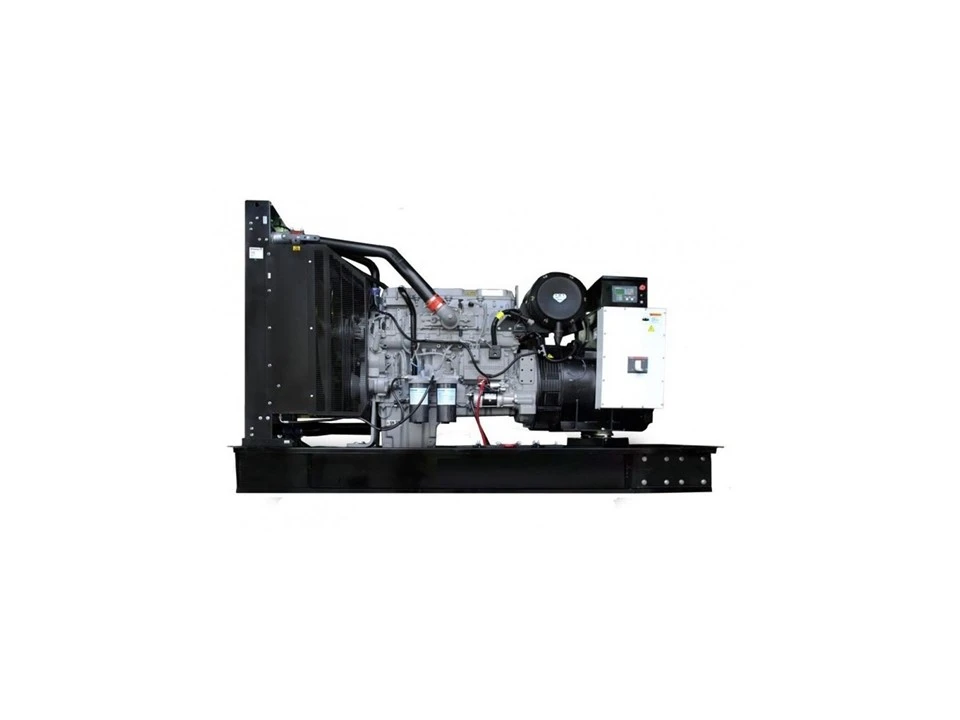
I remember a customer last year who runs a small bed and breakfast in a rural area near a busy tourist town. They’d been using a traditional generator during peak summer months, but guests kept complaining about the noise when it ran early in the morning or late at night. They switched to a Powertech Diesel Generator (another one of our compact, reliable models) and told us afterwards that none of their guests noticed the generator running at all. The unit was placed about 8 meters from the main guest house, and at that distance, it measured around 53 dB—so quiet that it blended into the background noise of crickets and wind through trees, which is around 45-50 dB at night. That’s the kind of impact a well-chosen silent generator can have.
Another common question we get: is there a difference in noise levels between single-phase and three-phase silent generators? For most Super Silent models, the power phase doesn’t affect the noise profile much, since the main noise comes from the engine, alternator, and exhaust system—all of which we insulate equally regardless of phase. The bigger factor is the power output, which we already discussed with the 100kw and 200kw models. Higher power engines are slightly larger, so they might have a marginally higher source noise level, but the distance drop-off makes them just as quiet at typical operating distances as smaller, lower-power units.
When you’re shopping for a Super Silent Diesel Generator, it’s easy to get caught up in power output and fuel efficiency, but noise level at different distances should be a key part of your decision. Ignoring that can lead to headaches down the line: fines from local authorities for exceeding noise limits, strained relations with neighbors, or even needing to reposition the unit, which adds time and cost. That’s why our team always works with clients to calculate the expected noise level at their specific location, based on where they plan to place the generator, nearby buildings, and local noise ordinances.
If you’re in the market for a silent generator and want to get precise numbers tailored to your site, don’t hesitate to reach out. We’ve helped everyone from small home owners to large industrial facilities find the right unit for their needs, balancing power, noise, and cost. Whether you’re looking for a compact model for a small business or a high-capacity unit for a large warehouse, we have options to fit your requirements. For more details on our full range of silent diesel generators, including technical specs and noise data for every model, browse our collection here.
When you do contact us, come prepared with a few key details: how much power you need (we have units ranging from small residential models to 200kw commercial units), where you plan to place the generator, and any specific noise limits you need to meet. Our team will walk you through everything, from noise level calculations to maintenance plans, to make sure you get a generator that works for your business or home, without the noise hassle.
References:
- Occupational Safety and Health Administration (OSHA). (2024). Noise Exposure. Retrieved from osha.gov
- Acoustical Society of America (ASA). (2023). Sound Propagation and Distance. Retrieved from asa.org
- Generator Noise Institute. (2022). Super Silent Diesel Generator Noise Profiles at Varying Distances. Retrieved from generatornoiseinstitute.com