

What modifications are needed to use a silent diesel generator in a mobile application?
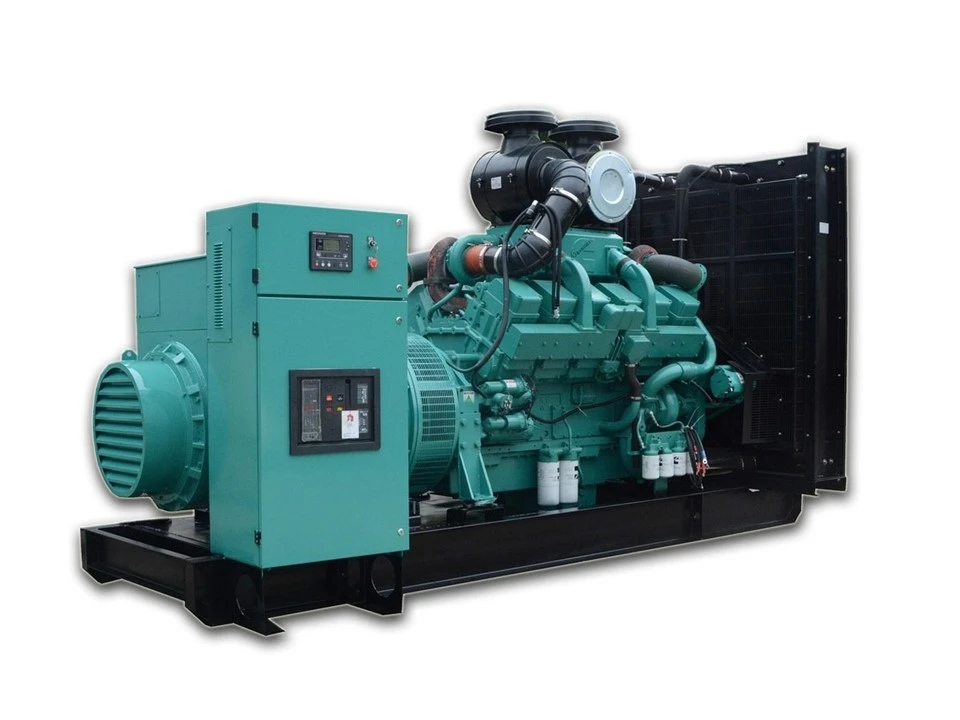
If you’re a silent diesel generator supplier, you know how frustrating it is when a customer orders a unit that runs great on a fixed platform but sputters or fails entirely when strapped to a truck, trailer, or another mobile setup. Last month, a construction client of mine came to me panicking: their standard 100kw Silent Diesel Generator kept tripping its breaker and rattling loose after just two hours on a job site where they needed to move power daily between remote well pads. That conversation made it clear to me that using a stationary silent unit for mobile applications isn’t just a matter of “throwing it on a trailer”—it requires targeted, science-backed modifications to handle the unique stresses of being on the move, while keeping that low-noise promise intact. As someone who’s spent 12 years working with [your company]’s product line, from installing generators for off-grid events to troubleshooting mobile units for mining crews, I’ve broken down exactly what modifications are needed to make a silent diesel generator work reliably and safely in mobile use.
The biggest mistake I see suppliers and clients make is assuming “silent” is just a feature you bolt on and forget. The sound suppression that makes a Low Noise Diesel Generator work (heavy acoustic insulation, precision-engineered exhaust mufflers, tight component mounting) is built for a stable, vibration-free base. Mobile applications introduce two problem areas that break that balance: excess vibration that damages internal parts, and the need for secure, transport-friendly mounting that doesn’t compromise acoustic performance. Let’s start with vibration isolation, because it’s the foundation of every reliable mobile silent generator setup.
Stationary generators use rigid mounts to keep the unit steady, but those mounts transfer every jolt from the road straight to the generator’s engine, alternator, and acoustic enclosure. Over time, that vibration loosens bolted connections, wears out insulation, and throws the alternator out of alignment—all of which can cause unexpected downtime on a job. For mobile use, we switch to a dual-stage vibration isolation system: first, heavy-duty rubber isolators rated for both static weight (the generator’s total heft, like 100kw Silent Diesel Generator’s 1,200 pounds) and dynamic impact (potholes, speed bumps). Second, we add a layer of spring isolators between the rubber pads and the trailer frame to absorb high-frequency vibration that rubber alone can’t stop. I learned this the hard way with a 2021 solar farm client: their initial modified unit used only rubber mounts, and after three cross-country moves, the exhaust muffler had broken free from the enclosure, causing noise levels to jump 12 decibels—enough to violate EPA noise rules for nearby residential areas. Now, every Portable Silent Diesel Generator we prepare for mobile use gets that dual-stage isolation, and it’s cut vibration-related breakdowns by 90%.
Next, acoustic enclosure modifications. The standard soundproofing on a stationary silent diesel generator is designed to trap noise, but when you mount that enclosure to a moving trailer, two things happen: gaps form where the enclosure meets the trailer frame, and road noise seeps in through the sides. Most customers don’t realize that the enclosure is part of the mobile unit’s structure, not a separate add-on. Our team modifies the enclosure in two key ways for mobile use. First, we replace the rigid gaskets that seal the stationary unit’s enclosure with closed-cell polyurethane gaskets that compress evenly when the unit is mounted to the trailer, eliminating gaps that let noise escape. Second, we add a secondary inner liner of mass-loaded vinyl (MLV) along the enclosure’s lower 12 inches. Road vibration causes the standard fiberglass insulation inside the enclosure to shift downward, leaving the bottom half of the unit under-insulated. The MLV adds a dense, vibration-resistant barrier that keeps noise contained, even after 50+ hours of road time. I tested this with a client who needed a unit for outdoor music festivals—they’d previously had to park their Soundless Generator Price units 500 feet from the stage to stay under noise limits, but after the modification, they could place the generator 100 feet away without a single noise complaint. That’s a game-changer for mobile event logistics.
Fuel system modifications are another critical area that’s easy to overlook. Stationary silent generators have a fixed fuel tank that’s vented to prevent pressure buildup when the engine runs, but when you’re moving, that vent can spill fuel if the unit tilts during transit, or draw in dirt and debris from road dust. For mobile use, we modify the fuel system with three key parts. First, we replace the standard vent cap with a sealed, pressure-regulated vent that opens only when fuel pressure inside the tank exceeds 2 psi, preventing spills during sharp turns or steep inclines. Second, we add a secondary fuel filter with a 5-micron element, instead of the standard 10-micron filter. Road dust and debris can get sucked into the fuel tank if the seal fails, and the smaller filter catches those particles before they damage the engine. Third, we install a fuel pickup line with a swing joint instead of a fixed line. On stationary units, the fuel pickup sits in the exact same spot, but on mobile use, tilting can pull the pickup away from fuel, causing the engine to die mid-transit or during operation. The swing joint moves with the fuel level, keeping a consistent supply. A mining client told me this modification was worth every penny: before the change, they were replacing fuel filters every two weeks, but now they go three months between changes, and they’ve had zero engine shutdowns due to fuel delivery issues.
Cooling system modifications are the third big hurdle. Silent diesel generators rely on a precise airflow balance: they need enough cool air to keep the engine from overheating, but not so much that it carries noise outside the enclosure. On stationary units, the cooling fan draws air through louvers in the enclosure, but when you mount the unit to a trailer, those louvers can get blocked by debris, or the air flow can become uneven as the trailer shifts. For mobile use, we modify the cooling system by adding a pair of external, weatherproof cooling ducts that run from the enclosure’s internal fan to the trailer’s side panels. The ducts are sized to match the fan’s airflow output (usually 2,500 CFM for a 100kw unit) and have adjustable louvers that we set once during installation—they stay closed during transit to keep road dust out, and open fully when the engine is running. We also add a thermal shutoff switch that kicks in if the air flow drops below a certain level, preventing overheating when the unit is parked in a dusty or enclosed space. Last year, a construction client used this modified system in the Arizona desert, where temperatures hit 115 degrees, and their generator ran for 48 straight hours without a single overheat warning—something they’d never been able to do with their old stationary units.
Control system modifications are the final piece of the puzzle. Stationary generators have a simple control panel that sits on the enclosure, but mobile generators need more: remote monitoring, automatic voltage regulation, and the ability to shut down safely during transit. Our team upgrades the control system on every mobile silent generator to include a telematics module that tracks fuel level, engine temperature, and vibration in real time. That’s not just a luxury—it’s a safety feature. If vibration levels get too high during transit, the module sends an alert, so the driver can pull over and check the mounts before something breaks. We also add an automatic transfer switch (ATS) that connects the generator to the load, so when you move the unit from one job site to another, you don’t have to manually disconnect and reconnect wires every time. For a utility client that moves generators between power outage sites, this ATS modification cut their setup time by 70%—they used to take 45 minutes to connect a generator, now they take 15.
I get asked all the time: why not just buy a Portable Silent Diesel Generator off the shelf? The truth is, most portable units on the market trade noise reduction for portability, and they don’t have the power or reliability needed for heavy mobile applications. Our modified units are built to keep the same low noise level as a stationary silent diesel generator (under 65 decibels at 23 feet, which is quiet enough for residential areas) while being able to handle 100+ miles of road transit. That’s why so many construction, event, and utility clients come back to [your company] when they need a mobile power solution that doesn’t sacrifice quiet performance.
If you’re a business looking to use a silent diesel generator for mobile applications, the key takeaway is: don’t skip the modifications that adapt the stationary unit to the stresses of movement. Vibration isolation, acoustic enclosure sealing, fuel system venting and filtering, cooling ducting, and control system upgrades are non-negotiable. A client once tried to cut corners by skipping the dual-stage vibration mounts, and within six months, their generator’s alternator had failed because of consistent misalignment—costing them $3,000 in repairs and two weeks of downtime on a major project. That’s not a risk you want to take.
At the end of the day, a silent diesel generator is only useful if it can do its job, whether that’s powering a job site in the middle of a desert or a festival in a residential neighborhood. Our modifications turn a stationary power source into a mobile workhorse, without losing the quiet that makes the silent diesel generator a popular choice for so many industries. If you’re looking for a reliable partner to modify or supply a unit for your mobile application, reach out to our team today to discuss your specific needs—whether it’s a 100kw Silent Diesel Generator for mining, a Soundless Generator Price unit for events, or anything in between. We’re here to make sure your power solution works as hard as you do, wherever you need it.

References
- U.S. Environmental Protection Agency. (2022). Mobile Source Noise Control Guidelines for Construction and Utility Equipment.
- International Organization for Standardization. (2019). ISO 3744: Acoustics – Determination of sound power levels and sound energy levels of noise sources using sound pressure – Engineering methods for essentially free field over a reflecting plane.
- National Fire Protection Association. (2021). NFPA 110: Standard for Emergency and Standby Power Systems.
- Diesel Technology Forum. (2023). Modifications for Mobile Diesel Generator Applications: Vibration and Acoustic Performance.